
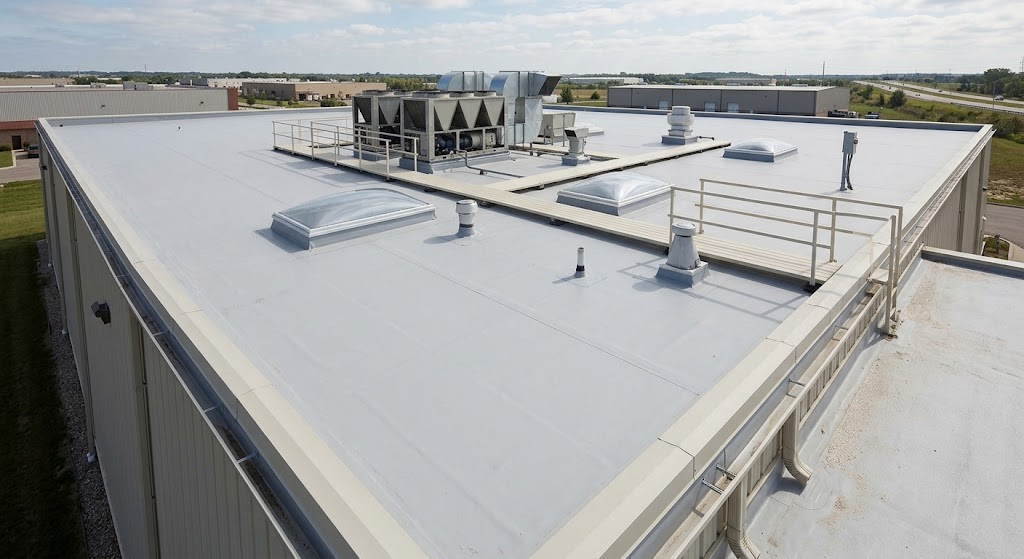
Commercial roofing membranes protect buildings where a shallow roof pitch cannot quickly shed rain or snow. From warehouses and retail centers to offices and apartment buildings, these systems combine a waterproof surface with insulation, flashing, and carefully planned drainage.
Understanding Low-Slope Roofing and Membrane Design
Low-slope roofing typically describes roofs pitched from about ¼:12 to 3:12, although definitions can vary by code and system. Often called flat roofs, they still need a slight incline to direct water toward drains, scuppers, or gutters.
Unlike shingles on steep roofs, commercial roofing membranes create a continuous water-resistant layer across the roof deck. The complete assembly may include a vapor retarder, commercial roof insulation, membrane, flashing, and drainage components. When each layer is designed to work with the others, the system helps control moisture and indoor heat transfer.
These roofs also make space for HVAC equipment, ventilation systems, and solar panels. That accessibility is useful, but it increases the importance of protected walkways, secure equipment supports, and inspections around penetrations.
Comparing Commercial Roofing Membranes
Each membrane offers a different balance of flexibility, reflectivity, seam construction, and resistance to rooftop conditions. The following comparison summarizes common applications; actual service life depends on design, installation, climate, and maintenance.
| System | Key characteristics | Common applications |
|---|---|---|
| TPO roofing | Reflective thermoplastic membrane with heat-welded seams | Commercial buildings seeking solar reflectance |
| EPDM roofing | Flexible synthetic rubber with strong weather resistance | Buildings exposed to temperature swings |
| PVC roofing | Heat-welded seams and resistance to grease and many chemicals | Restaurants and certain industrial facilities |
| Modified bitumen roofing | Reinforced asphalt membrane installed in one or more layers | Smaller roofs or areas needing robust surface protection |
| Built-up roofing | Multiple layers of bitumen and reinforcing fabric | Roofs with regular maintenance traffic |
TPO and PVC are single-ply roofing systems, but they are not interchangeable: chemical exposure and manufacturer specifications can influence the choice. EPDM’s flexibility suits varied temperatures, while modified bitumen and built-up systems offer layered construction. The best material is the one matched to the building’s actual conditions.
Selecting a Membrane for Building Conditions
Climate and rooftop use provide a practical starting point, but the whole roof assembly must be considered. Reflective membranes can limit solar heat gain, while insulation levels and drainage design affect comfort and moisture control.
Before specifying a system, assess the conditions that most influence its performance:
- Climate: consider sun exposure, temperature variation, wind, and seasonal precipitation.
- Roof activity: account for equipment servicing, pedestrian routes, and the likelihood of punctures.
- Exposure: identify grease, oils, chemicals, or other contaminants that could affect the membrane.
- Existing assembly: check the deck, insulation, moisture conditions, and drainage before planning a recover or replacement.
Drainage deserves particular attention because standing water can stress seams and reveal inadequate slope or blocked outlets. A qualified roofing professional can evaluate whether the roof needs drainage improvements, added insulation, or a different membrane rather than simply replacing the visible surface.
Installing Roof Membranes for Lasting Waterproofing
Successful roof membrane installation begins with a sound, dry substrate. Contractors inspect the deck, address damaged materials, and confirm that the assembly can support the proposed system before laying insulation and membrane.
Depending on the product, membranes may be mechanically fastened, adhered, or heat-welded. Seams, edges, drains, and penetrations require careful detailing: a strong field membrane cannot compensate for weak flashing or poorly sealed transitions. Final checks should verify seam integrity, secure attachment, and clear drainage paths.
Because installation methods vary by material and manufacturer, qualified crews should follow product requirements and applicable building codes. The quality of these details has a direct bearing on roof waterproofing and warranty eligibility.
Maintaining Commercial Roof Performance
Routine inspections help identify small defects before water reaches the building interior. Many property managers arrange professional reviews in spring and fall, as well as after severe storms, with timing adjusted to local conditions and the roof’s age.
Inspections should focus on drains and scuppers, membrane seams, flashing, rooftop equipment supports, and areas showing punctures or persistent ponding. Remove debris using methods appropriate for the membrane, and document any changes so repairs can be planned rather than deferred.
Maintenance also protects energy performance: damaged insulation or wet sections can undermine the benefits of a reflective surface. A roofing professional can assess the assembly, recommend repairs, and provide guidance tailored to the building’s use and exposure.


