
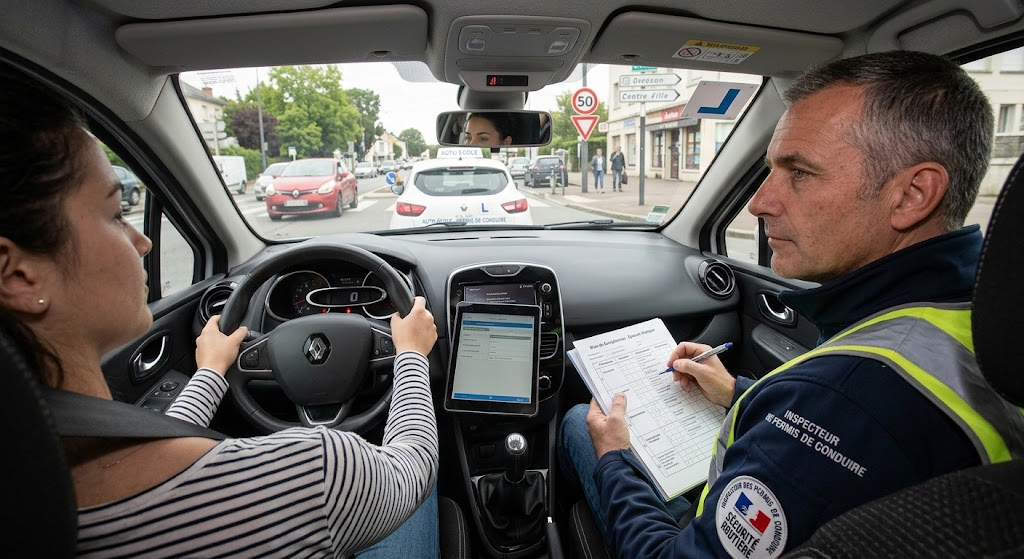
A road test assesses more than a driver’s ability to follow traffic rules: it also checks whether the vehicle is safe to use and whether the applicant can operate its essential controls. Before the drive begins, an examiner may review documents, inspect exterior equipment, ask for hand signals, and request demonstrations of in-cabin controls.
Vehicle Readiness Checks Before a Road Test
The pre-drive inspection typically starts with paperwork and basic vehicle condition. Bring a valid learner’s permit, current registration, and proof of insurance that applies to the test vehicle; confirm whether originals, printed documents, or electronic records are accepted in your state.
The examiner may check that the front and rear turn signals, brake lights, horn, driver’s window, tires, and passenger door work properly. A brake light or signal that does not function can stop the test before driving begins. A windshield crack that obstructs the driver’s view, exposed tire cords, or a seat belt that will not latch may also raise safety concerns.
Use this practical list as a preparation aid, then verify the official requirements for the test location:
- Check that required documents are current and match the vehicle.
- Test all exterior lights, the horn, and the driver’s window.
- Inspect tires, doors, windshield, mirrors, and seat belts for visible defects.
- Look for illuminated warning lights and resolve mechanical concerns before test day.
A vehicle can be roadworthy in everyday use yet fail a particular jurisdiction’s inspection criteria, so local guidance should always take precedence.
Exterior Equipment and Hand Signals
During an exterior check, the examiner may ask the applicant to activate lights while observing the vehicle from outside. Brake lamps should illuminate when the pedal is pressed, and signals should flash clearly; rapid flashing can indicate a failed bulb. Tire tread, mirrors, and access to the passenger seat also matter because they support visibility and safe communication.
Applicants may also be asked to show the standard left-arm signals, used when turn indicators are unavailable. Extend the left arm straight out for a left turn; bend the elbow upward for a right turn; and point the arm downward to indicate slowing or stopping. These signals should be demonstrated clearly from the open driver’s window.
The details are straightforward, but familiarity prevents hesitation. A review of vehicle safety and driving preparation can complement practice, while the relevant state motor-vehicle agency remains the authority on test rules.
In-Cabin Controls Examiners May Ask You to Locate
Before moving, an examiner may ask the applicant to identify or operate selected controls without searching the dashboard for an extended period. Learn the location and function of the headlights, hazard flashers, front and rear defrosters, windshield wipers, washer, and emergency parking brake.
Know how the steering, brakes, and accelerator respond, and understand whether the vehicle has an automatic or manual transmission. Before departure, adjust the seat and mirrors, fasten all required seat belts, and confirm that the parking brake is released. Being able to operate controls smoothly helps keep attention on the road rather than the dashboard.
Practice locating controls while the car is parked. A short review using a road-test preparation resource can reinforce vehicle-readiness habits, but the owner’s manual is the best reference for unfamiliar controls.
Driving Skills Evaluated on the Road
Once the vehicle passes inspection, the examiner typically observes how the applicant handles ordinary traffic situations. Common evaluation areas include scanning, signaling, lane position, speed choice, yielding, turning, stopping, and reversing or parking where required. The test is not simply a sequence of maneuvers: consistent observation and calm decisions show that the driver can manage changing conditions.
Before changing lanes, check mirrors and blind spots, signal in good time, and move only when there is a safe gap. At intersections, obey signs and signals, yield where required, and stop fully behind the line. Keep a safe following distance and adjust speed to visibility, traffic, and road conditions.
Scoring systems, required maneuvers, and reasons for immediate failure vary by state. Review the official appointment instructions before test day, and consult a qualified driving instructor for personalized guidance or help correcting specific control and safety issues.