
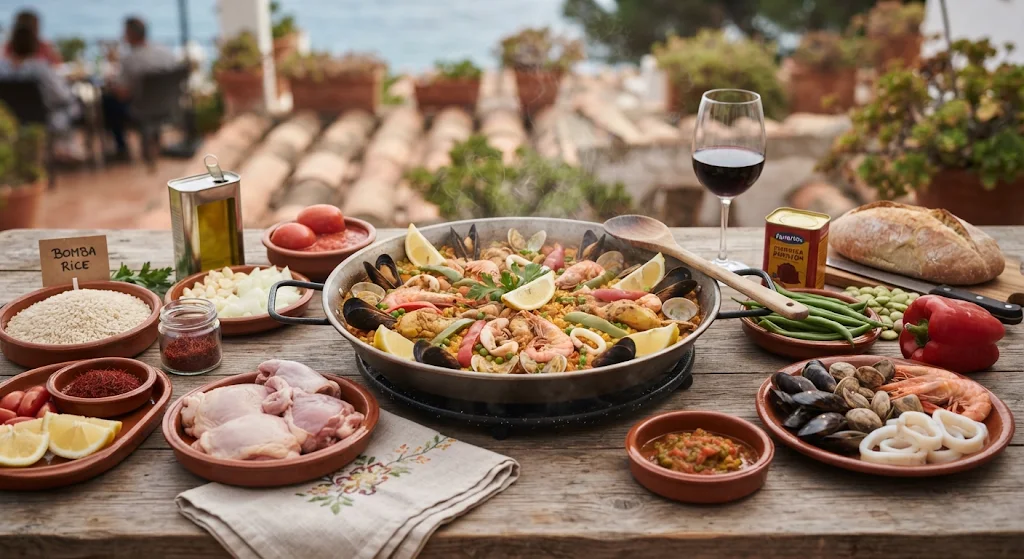
Restaurant paella is defined less by a fixed recipe than by the ingredients and cooking traditions of the region it represents. 🇪🇸 In the Valencian classic, rice, local beans, meat, vegetables, olive oil and saffron build a layered flavor in a wide pan, while seafood versions follow a different path. 🥘 Understanding what each ingredient contributes helps diners recognize the difference between a traditional paella and a restaurant’s creative interpretation.
🥘 Traditional Ingredients in Valencian Restaurant Paella
Paella Valenciana is the reference point for many traditional restaurant versions. Its ingredients reflect the agricultural landscape around Valencia, where rice fields, vegetable plots and livestock shaped a practical, seasonal dish. 🌾
🍗 Foundations of the Paella Valenciana Recipe
Bomba rice is prized for absorbing flavorful liquid while keeping its grains distinct. Restaurants often choose it, or another short-grain variety suited to paella, because long-grain rice does not produce the same texture.
Chicken and rabbit provide the classic meat base, while green beans and Garrofó beans add contrasting textures. Extra-virgin olive oil helps brown the meat and vegetables, carrying their flavor into the broth. 🫒
🌶️ Flavor Ingredients That Shape the Broth
Once the main ingredients are established, the seasoning and cooking liquid determine the dish’s aroma and depth. Restaurant kitchens build these flavors in the pan, rather than relying on a finished sauce.
🍅 Aromatic Ingredients and Rice
Tomatoes are commonly cooked down with the meat and vegetables to form a concentrated base. Saffron lends the broth its distinctive fragrance and golden color; paprika may also appear, depending on the cook and local practice.
Ñora peppers, dried peppers used in parts of Spain, can contribute a mellow, rounded savoriness when incorporated into a sofrito or broth. Rosemary is associated with some Valencian preparations, but it is used with restraint so its pine-like aroma does not overwhelm the rice. 🌿
These ingredients work together in stages. Browning builds savory notes, the tomato mixture concentrates, and the broth carries those flavors into the rice; paella rice is generally left undistirred so it cooks evenly and can form a lightly toasted socarrat at the bottom. 🔥
🦐 Restaurant Choices and Regional Variations
Restaurant menus may offer Valencian, seafood or mixed paella, but these are distinct interpretations rather than interchangeable ingredient lists. A seafood version typically relies on fish stock and shellfish, while the traditional Valencian recipe centers on meat, beans and vegetables.
🍽️ Ingredient Roles at a Glance
The table distinguishes the classic ingredients from seasonings and explains why each is selected. Exact combinations vary by region and kitchen, so the name of a dish can offer useful context when ordering.
| Ingredient | Role in the Dish | Common Context |
|---|---|---|
| Bomba rice | Absorbs broth while retaining structure | Traditional and restaurant paellas |
| Chicken and rabbit | Provide the meat base and savory depth | Paella Valenciana |
| Garrofó beans and green beans | Add texture and regional character | Paella Valenciana |
| Saffron and tomatoes | Contribute aroma, color and a concentrated base | Many traditional versions |
| Ñora peppers and rosemary | Add measured, aromatic complexity | Regional or kitchen-specific use |
When assessing a restaurant paella, the ingredient list is only part of the story: a broad pan, an even layer of rice and controlled heat are equally revealing. 👨🍳 These choices help preserve the dish’s character without confusing a regional variation with the Valencian standard.
Restaurant Paella as a Balance of Tradition and Technique
A well-made restaurant paella respects the relationship between its ingredients: rice needs measured liquid, aromatics should remain balanced, and the pan should not be crowded. These principles explain why traditional versions favor a focused selection rather than an assortment of unrelated toppings.
For diners seeking a particular regional style, asking whether a paella is Valencian, seafood-based or mixed can clarify what to expect. A knowledgeable Spanish cuisine professional can also offer tailored guidance on traditional ingredients and preparation. 🥘