
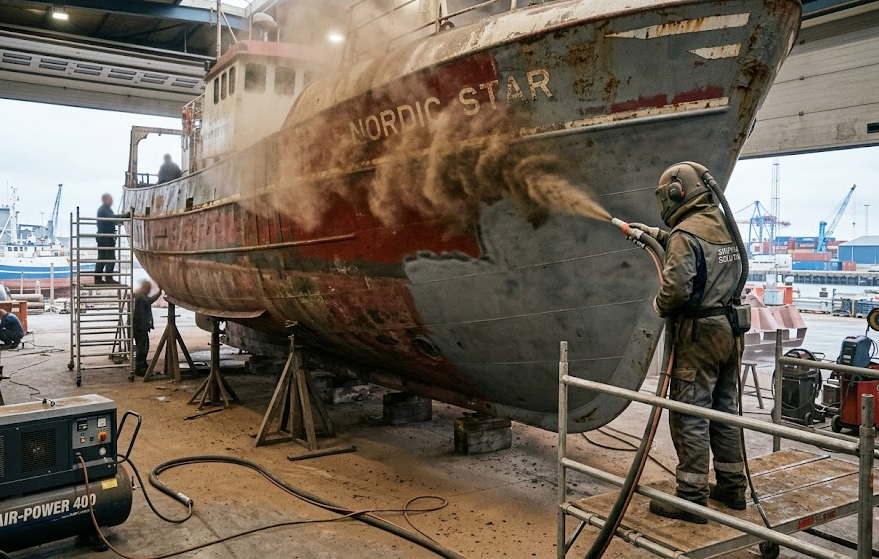
Restoring boats to their former glory requires precision and care, especially when dealing with tough coatings and corrosion. Among the techniques used, sandblasting stands out as a reliable method for efficient surface preparation and marine maintenance. By combining powerful abrasive blasting with modern dustless technology, boat owners and professionals can achieve optimal results without harming delicate materials or the environment.
Understanding Sandblasting for Boats and Its Role in Surface Preparation
Sandblasting plays a vital role in boat restoration by thoroughly removing unwanted surface elements such as old paint, rust, and marine growth. This abrasive blasting technique propels fine particles at high velocity against the boat’s hull, decks, or metal components. The impact strips away deteriorated coatings, revealing a clean and smooth surface ready for repair or repainting.
This process is indispensable for marine maintenance as it ensures that hulls are free from contaminants that can compromise boat performance and longevity. Sandblasting also contributes to boat repair by improving adhesion for new coatings, which protects the vessel from further degradation.
Exploring Dustless Blasting: Enhancing Efficiency and Environmental Safety
Among sandblasting methods, dustless blasting has gained preference due to its superior safety profile and environmental benefits. This technique integrates water with abrasive media, greatly reducing airborne dust and debris during blasting. The water serves to cool the surface, preventing heat buildup that could damage the boat’s hull.
Dustless blasting allows for the efficient removal of paint stripping, including tough antifouling coatings, without risking harm to fiberglass or aluminum. Additionally, it captures contaminants efficiently, simplifying waste collection and disposal in compliance with environmental regulations.
Advantages of Dustless Blasting for Boats
Turning to dustless blasting provides multiple benefits worth considering for both commercial yards and private owners. This method:
- Minimizes dust-related hazards, protecting workers and the surrounding environment.
- Effectively removes surface-level rust without compromising the underlying metal integrity.
- Tackles marine growth such as barnacles and algae, which otherwise add excessive weight and slow the boat.
- Accommodates different boat materials including wood, steel, and fiberglass.
- Reduces preparation time, streamlining the restoration process and improving overall efficiency.
These advantages make dustless blasting a preferred choice in marine maintenance to restore the vessel while supporting ecological responsibility.
Applying Sandblasting Techniques for Effective Rust Removal and Paint Stripping
Rust and old coatings can cause significant issues if left untreated on boats. Effective rust removal through abrasive blasting eliminates surface corrosion while preserving the metal underneath. The removal process is critical in ensuring structural soundness and preventing further degradation.
Similarly, paint stripping is essential for preparing boats for repainting and maintenance. Over time, layers of antifouling paint and gelcoat accumulate, diminishing aesthetics and protective properties. Sandblasting efficiently strips these layers, exposing bare surfaces ready for new applications.
Best Practices in Rust and Paint Removal for Boat Restoration
Understanding the nuances of abrasive media and pressure settings greatly influences outcome quality. Professional sandblasting operators tailor their approach based on the boat’s material and condition to avoid damage.
Common practices include:
- Selecting appropriate abrasive types such as glass beads or aluminum oxide for gentle but effective cleaning.
- Adjusting pressure levels to strip coatings without harming delicate fiberglass or wood.
- Performing pre-blasting assessments to detect vulnerable areas requiring special attention.
Adopting these techniques ensures superior surface preparation crucial for the restoration’s longevity and aesthetic appeal.
Maximizing Efficiency in Marine Maintenance Through Sandblasting
Efficiency in boat restoration depends largely on the quality of surface preparation. Sandblasting offers rapid, thorough cleaning that cannot be matched by manual scrubbing or chemical stripping. By eliminating stubborn deposits and coatings, sandblasting helps reduce labor hours and expenses associated with repeated treatments.
Moreover, the method facilitates a uniform surface texture that supports better adherence of new protective layers, which is key for preventing future damage. This directly impacts fuel efficiency and performance as a clean hull experiences less drag through water.
Ways to Harness Sandblasting for Optimal Boat Care
Boat owners looking to extend the lifespan of their vessels can benefit from regular maintenance schedules incorporating sandblasting. The process can be synchronized with:
- Routine inspections for corrosion, cracks, and marine buildup requiring immediate attention.
- Pre-season repainting cycles ensuring the hull remains protected against harsh seawater conditions.
- Post-accident or damage repairs where precise surface restoration is paramount before repainting or fiberglass work.
Integration of sandblasting into routine marine maintenance supports the boat’s value and reliability while enabling smooth sailing throughout its service life.
Consulting with experts offers tailored solutions that address specific needs, be it gentle gelcoat stripping on fiberglass yachts or heavy-duty rust removal on steel hulls. Their expertise reduces risks and reassures owners about the safety and efficiency of the restoration process.