
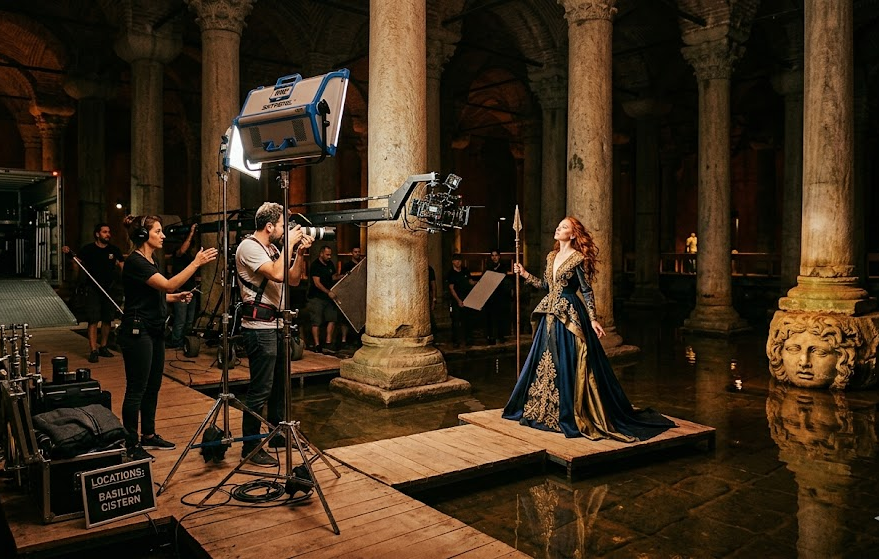
Every great image or scene begins with a decision that rarely makes it into the final credits: where to shoot. The location is not just a backdrop — it is a storytelling tool, a mood-setter, and sometimes the main character of the frame. Finding spots that feel genuinely fresh, however, requires more than a quick Google Maps search. It demands curiosity, preparation, and a willingness to look where most people don’t.
Start With Research, But Go Beyond the First Page
The most photographed locations in the world are that way for a reason — they are visually compelling. But they are also saturated. If you want imagery that stands apart, your research needs to go deeper than the top results on Instagram or Pinterest.
Begin with local archives. Historical societies, municipal photo libraries, and regional newspapers often hold records of places that were significant decades ago but have since faded from public attention. Abandoned factories, former fairgrounds, decommissioned rail stations — these sites carry layers of visual texture that purpose-built sets rarely replicate.
Satellite tools like Google Earth are underused by photographers and filmmakers. Switching to the historical imagery feature reveals how landscapes have changed over time and sometimes uncovers structures that no longer appear on standard maps. Pair this with topographic data to identify terrain features — valleys, plateaus, unusual rock formations — that don’t appear in standard travel guides.
Online communities focused on urban exploration, rural hiking, or regional history are also valuable sources. Members often document locations with genuine detail, including access conditions and seasonal variations in light and vegetation.
Train Your Eye for the Everyday
Some of the most striking photography locations are hiding in plain sight. Industrial zones on the outskirts of mid-sized cities frequently offer geometric compositions, raw materials, and light conditions that are difficult to manufacture artificially. Concrete underpasses, water treatment infrastructure, port facilities — these environments reward photographers who look past their utilitarian function.
For narrative filmmaking, residential neighborhoods in transition offer a different kind of richness. Streets where older architecture sits alongside new construction tell a story about time passing without a single line of dialogue. Markets at dawn, train stations between rush hours, parking structures on Sundays — the key is timing. Familiar places become unfamiliar when visited at the right hour.
Keep a dedicated location log. Whenever you pass somewhere with visual potential — a particular quality of light falling through a factory window, a patch of overgrown land behind a railway track — note it. Many strong shoots are built from locations accumulated over months of ordinary travel.
Scout With Intentionality
Finding a location and preparing to shoot it are two different skills. A place that looks striking in casual observation may present serious practical challenges: inconsistent light windows, unpredictable foot traffic, noise pollution that complicates audio recording, or restricted access.
When scouting, visit at the same time of day you intend to shoot. Light at midday and light at golden hour in the same location can produce results that feel like entirely different places. Observe how people move through the space, where shadows fall, and how the environment changes across an hour.
For film productions, assess the logistics methodically. Identify where equipment trucks can park, where talent can be held between takes, and whether the ambient noise floor is manageable. A visually perfect location that adds three hours of logistical complexity to every shooting day will erode the creative energy of the entire crew.
For still photographers working alone or in small teams, the main variables are access and repeatability. Confirm whether the location requires permission, and if so, pursue it early. Many private landowners and facility managers will grant access for photography when approached professionally and with clarity about the intended use.
Build Relationships That Open Doors
The best location scouts in film and photography tend to share one trait: they invest in relationships before they need them. Local historians, property managers, municipal planning departments, and even long-term residents of a neighborhood can point toward places that never appear in any database.
Attend regional events, join local photography clubs, or volunteer for community projects in areas where you want to work. The conversations that follow often lead to access that no amount of online research could have generated.
Finding a truly unique location is rarely accidental. It is the result of sustained attention, methodical research, and a genuine interest in the stories that places carry — long before a camera ever enters the frame.


