
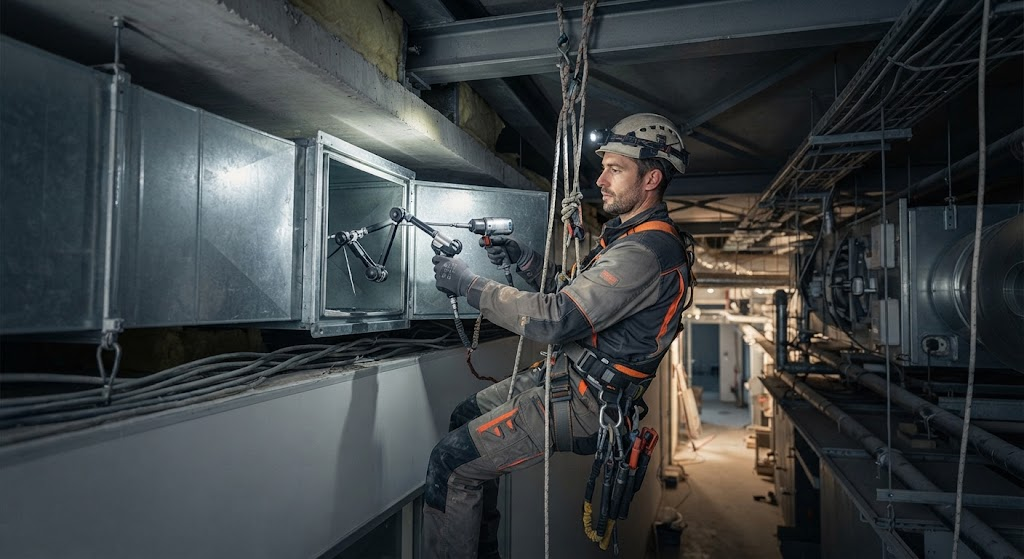
Accessing hard-to-reach locations is a formidable challenge in various industries, particularly when dealing with air shafts. These vertical openings serve crucial ventilation purposes in underground environments; however, their accessibility often requires specialized equipment. This article delves into the types of access equipment utilized for navigating these challenging spaces and ensuring safety and efficiency in operations.
Exploring Rope Access Techniques for Air Shafts
Rope access has emerged as a popular method for reaching confined spaces such as air shafts, where traditional access methods may not suffice. This technique involves trained professionals using ropes and harnesses to perform inspections or maintenance tasks at height.
Understanding the Fundamentals of Rope Access
The foundation of rope access lies in its redundancy system, typically consisting of two ropes anchored at different points. The main rope carries the load, allowing workers to ascend or descend the shaft. Simultaneously, the safety rope acts as an emergency backup, ensuring their safety should the primary system fail.
Essential Gear for Rope Access Professionals
Equipping technicians with the right gear is vital for successful operations. Basic equipment includes:
- Protective helmets to guard against falling objects.
- Fall arrest systems for added safety during descent or ascent.
- Specialized harnesses facilitating work positioning and suspension.
Additional gear may encompass ropes, descenders, and various connectors, all of which must adhere to safety standards and be regularly inspected for reliability.
Utilizing Heavy-Duty Equipment for Air Shaft Construction
When constructing or maintaining air shafts, employing heavy-duty equipment becomes essential. These machines improve efficiency and enhance safety measures, enabling operators to handle heavy loads without compromising integrity.
Choosing the Right Heavy-Duty Equipment
Selecting appropriate machinery depends on the specific requirements of the air shaft project. Options may include:
- Heavy-duty shaft handlers designed to lift and maneuver large equipment.
- Powerful winches that safely haul materials and personnel.
- Customized lifting devices tailored for unique job specifications.
By integrating these tools into the workflow, project managers can significantly streamline operations and maximize productivity.
Ensuring Safety and Compliance in Air Shaft Operations
The safety of personnel working in and around air shafts should remain a top priority. Adhering to industry regulations and implementing robust safety protocols can safeguard workers from potential hazards.
Implementing Effective Safety Measures
Organizations must enforce stringent safety measures, including:
- Regular equipment inspections to ensure functionality and safety compliance.
- Training programs designed to equip workers with essential safety knowledge.
- Emergency response strategies readily available to address unexpected incidents.
This commitment to safety not only protects workers but also contributes to overall operational success.
Innovating Access Solutions for Air Shafts
As technology advances, so too do the solutions available for accessing hard-to-reach air shafts. Innovative designs and equipment are continually being developed to enhance both safety and efficiency.
Current Trends in Air Shaft Access Equipment
Among the recent advancements are:
- Smart attachment systems that simplify equipment setup and enhance stability.
- Lightweight materials making the equipment easier to handle without compromising strength.
- Integrated technology that allows for real-time monitoring of safety conditions.
These innovations not only improve access solutions but also ensure compliance with evolving industry standards.
Exploring Future Prospects in Air Shaft Access
The need for efficient access equipment in hard-to-reach air shafts will only grow as industry demands increase. Continuous investment in technology and training will likely yield advancements that enhance worker safety and operational efficacy.
Preparing for Tomorrow’s Challenges
As we look ahead, companies will need to focus on:
- Investing in workforce training to ensure skills remain current.
- Embracing sustainable practices to minimize environmental impacts.
- Pioneering new access methods tailored to future operational challenges.
By proactively addressing these areas, businesses can position themselves for success as they navigate the complexities of air shaft access.
In conclusion, accessing hard-to-reach air shafts requires suitable equipment to ensure safe and efficient work. Choosing the right access solutions can make inspections, cleaning, and maintenance easier while reducing unnecessary risks.


