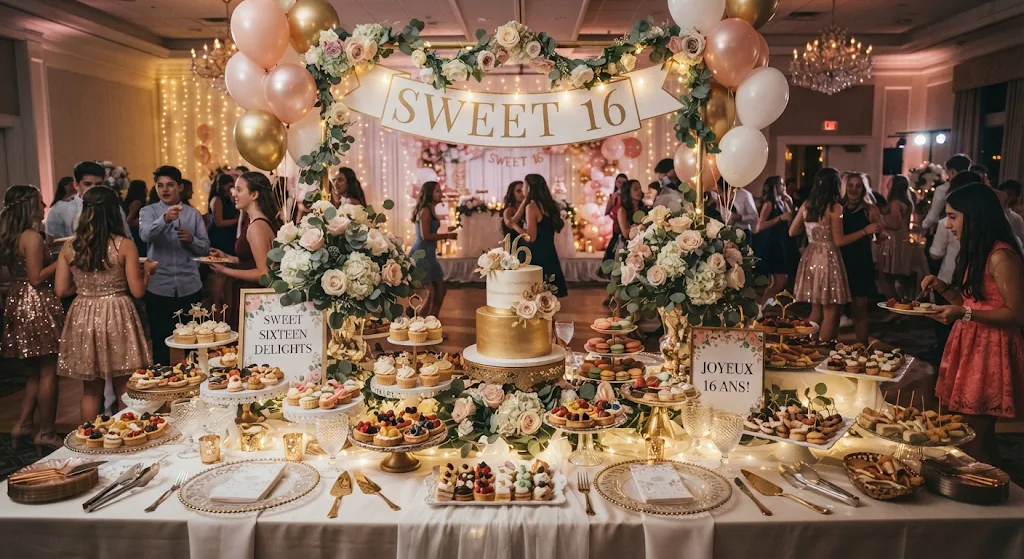
A Sweet 16 menu shapes more than the meal: it sets the pace of the celebration, brings guests together, and helps reflect the guest of honor’s style. From buffet service and plated dinners to food stations, the best approach depends on the venue, schedule, guest list, and level of interaction desired.
Sweet 16 Catering Formats for Different Party Styles
The catering format influences how guests move through the event and how much time they spend dining. A seated dinner creates a defined pause for speeches or performances, while a more flexible setup lets guests mingle between dancing, photos, and other activities.
Buffet service offers variety and allows guests to choose portions, making it a flexible option for mixed ages and appetites. Plated dinners provide a more structured experience, with courses served at the table; they can suit formal venues or schedules that include planned moments such as a candle ceremony.
Before choosing, consider the event’s practical needs as well as its atmosphere:
- Buffets work well when guests value choice and the venue can accommodate serving lines.
- Plated meals suit celebrations with assigned seating or a carefully timed program.
- Food stations encourage movement and conversation, especially in open venues.
- Finger foods can keep service simple during a dance-focused or mostly standing event.
Sweet 16 Food Stations for Interactive Dining
Food stations divide the meal into distinct areas, allowing guests to explore different flavors at their own pace. They can also help reduce the feeling of a single long queue when the layout includes enough space and several serving points.
For a more engaging setup, interactive food stations can let guests choose toppings, sauces, or fillings. Options might include a pasta station, a build-your-own taco counter, or a made-to-order dessert display. Clear labels and staff support help keep each station accessible and service moving.
Stations are most effective when each has a clear purpose and the menu remains manageable. A few complementary choices usually create a more coherent meal than many unrelated counters, while separate signs can identify vegetarian, gluten-free, or other suitable selections.
Sweet 16 Menu Planning for Teens and Families
Teen party catering should feel celebratory without assuming every young guest wants the same foods. Familiar favorites can sit alongside fresher or more adventurous dishes, giving guests room to choose while keeping the overall menu appealing to the full group.
Custom menus can account for the venue, event length, cultural preferences, and dietary requirements. Share these details with the caterer well in advance, and ask how ingredients and potential allergens will be identified. For a long celebration, a lighter late-evening snack may also help maintain energy without replacing the main meal.
A useful comparison of the main formats can clarify which one best fits the event:
| Format | Best suited to | Planning consideration |
|---|---|---|
| Buffet service | Guests seeking variety and flexible portions | Allow room for serving lines and replenishment |
| Plated dinners | Formal schedules and seated celebrations | Confirm meal selections and dietary needs in advance |
| Food stations | Social events with space for guest movement | Arrange stations to prevent crowding |
| Finger foods | Casual receptions and dance-led parties | Choose items that are easy to eat while standing |
Sweet 16 Celebration Dining and Smooth Service
Celebration dining works best when catering supports the event rather than competing with it. Coordinate meal service with speeches, entertainment, and dancing; discuss arrival times, venue access, cleanup, and staffing so the schedule remains realistic.
A dessert bar can provide a lively final stop, with small pastries, fruit, or a cake display arranged for easy access. It can complement the main meal or serve as a focal point after dinner, but its placement should leave clear pathways and avoid bottlenecks near the dance floor.
Ask the caterer how service will adapt if the program runs late, how food will be kept at safe temperatures, and which staff members will handle dietary questions. These details turn a good menu into a dependable guest experience.
Matching the format to the venue, schedule, and guest preferences helps create a meal that feels personal and runs smoothly. A professional caterer can provide tailored guidance on menu choices, dietary accommodations, and service logistics.