Full vehicle wraps and partial wraps offer two distinct ways to turn a vehicle into a personalised design statement. One covers nearly every painted exterior surface; the other concentrates color and graphics in selected areas, balancing visual impact with the vehicle’s original finish. The right choice depends on more than appearance.
Coverage Choices for Custom Vehicle Wraps
Vehicle wrap coverage determines how much of the original finish remains visible and how continuous the design can be. Full vehicle wraps usually cover the painted exterior panels, while partial vehicle wraps focus on selected sections, such as the hood, roof, doors, or rear panels.
Each approach serves a different design goal. The distinction is not simply “more” or “less” material: coverage affects visual consistency, the role of the factory paint, and how a design interacts with a vehicle’s shape.
Full Coverage for Unified Designs
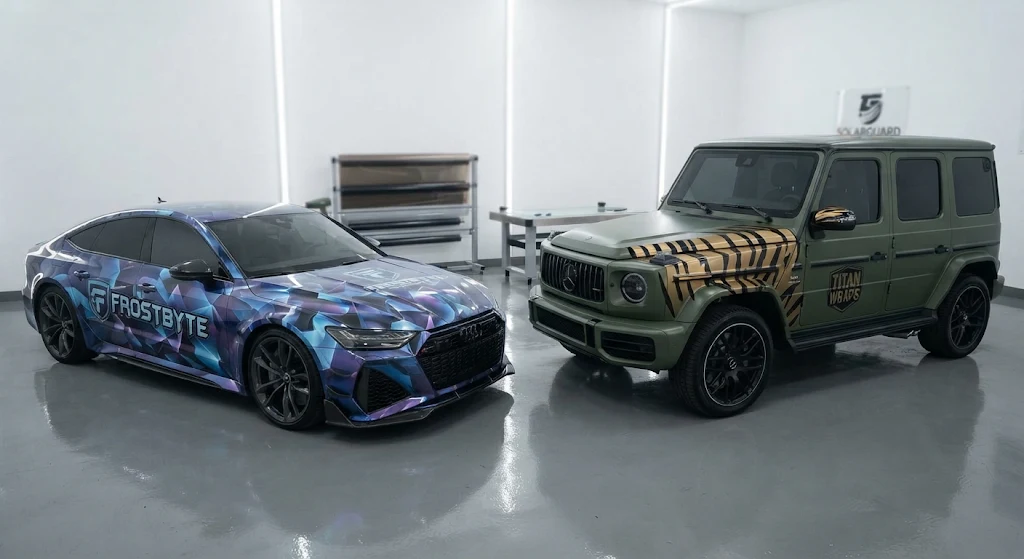
A full wrap creates a consistent appearance across most visible painted surfaces. It supports complex patterns, extensive custom graphics, and a complete vehicle color change without repainting, although door jambs and some recessed areas may remain uncovered unless specifically included in the installation plan.
This broad canvas can make contrasting roof colors, flowing patterns, or subtle finishes appear cohesive from every angle. Full coverage is often the better fit when the aim is to make the vehicle’s overall color or visual identity feel entirely different.
Partial Coverage for Focused Accents
Partial vehicle wraps use selected panels to create contrast while leaving other areas in their original paint. A roof, hood, or set of side panels can provide a strong visual feature without covering the entire exterior.
The exposed paint becomes part of the composition, so its color and condition should complement the chosen vinyl. Partial coverage can also suit designs that depend on a clear division between wrapped and unwrapped surfaces.
Design Factors That Influence the Choice
The vehicle’s shape should guide graphic placement. Curved panels, door seams, handles, and body lines can affect how a pattern appears after installation. Color matters too: a partial wrap should complement the factory paint, while a full wrap offers more freedom to change the vehicle’s overall appearance.
Before choosing a coverage level, consider these points:
-
Purpose: Decide whether the goal is a complete transformation, a subtle accent, or branded graphics.
-
Paint condition: Check for peeling, rust, dents, or damaged clear coat, since vinyl may not adhere properly to unstable surfaces.
-
Design continuity: Consider how the graphics will align across doors, bumpers, and curved panels.
-
Future changes: Think about whether the design may need updating or removal later.
-
Coverage details: Confirm which panels, edges, and recessed areas are included in the installation.
Installation, Care, and Long-Term Appearance
Both wrap types require careful preparation. The vehicle should be cleaned thoroughly, and the installer should check the paint before applying the film. Dust and surface defects can affect adhesion, while accurate trimming helps prevent gaps or lifting.
After installation, wash the vehicle with wrap-safe products and soft cloths. Avoid directing high-pressure water at film edges, and remove bird droppings or tree sap promptly to reduce staining.
The choice between full and partial coverage ultimately depends on the desired result, the vehicle’s existing finish, and the design itself. A full wrap provides a more complete visual transformation, while a partial wrap highlights selected areas and retains more of the original paint. Reviewing mock-ups with an experienced installer can help determine which approach will create a balanced, durable finish.