Dyed, carbon, and ceramic films can all give tinted car windows a more finished appearance, but they differ in how they manage sunlight, heat, and long-term wear. Understanding those differences makes it easier to match a film to driving conditions, comfort priorities, and local regulations. The right choice depends not only on shade, but also on the technology behind the tint.
Film Types and Their Distinctive Properties
Each film category handles light and heat differently. The labels describe its construction, so knowing what lies behind the appearance is a useful first step.
Dyed Film for Appearance and Glare Control
Dyed window film contains layers of dye that absorb sunlight and create a dark, uniform look. It can support glare reduction and add privacy, but its heat performance is generally more limited than that of advanced films. Over time, exposure to sunlight may cause some dyed products to fade or change color.
Carbon Film for Stable, Nonmetallic Performance
Carbon window film uses carbon particles to produce a matte finish and help reduce solar heat entering the cabin. Because it does not rely on metallic layers, it generally avoids interference with radio, GPS, and cellular signals. It offers a balance of appearance, durability, and everyday comfort.
Ceramic Film for Advanced Heat Management
Ceramic window film incorporates nonconductive ceramic particles that can filter infrared heat while maintaining good visibility. Many products also provide strong UV protection without requiring an especially dark shade. Performance varies by product, so specifications matter more than the word “ceramic” on its own.
Film Performance in Everyday Driving
Window film can make bright commutes and warm parking conditions more comfortable, yet no tint eliminates all incoming heat. Visible light transmission, infrared rejection, and ultraviolet filtering are separate measures; a darker film is not automatically a better heat barrier.
| Film Type | Typical Strength | Consideration |
|---|---|---|
| Dyed | Appearance and glare control | May fade; heat reduction can be modest |
| Carbon | Stable color and balanced performance | Compare product specifications |
| Ceramic | Heat and UV filtering with clear visibility | Performance and clarity vary by product |
For safe driving, the chosen shade should preserve adequate visibility, especially at night. Regulations for front side windows, windshields, and reflective films vary by location; check current local requirements before selecting a product. For broader reading on vehicle care, see these automotive care insights.
Installation and Product Selection
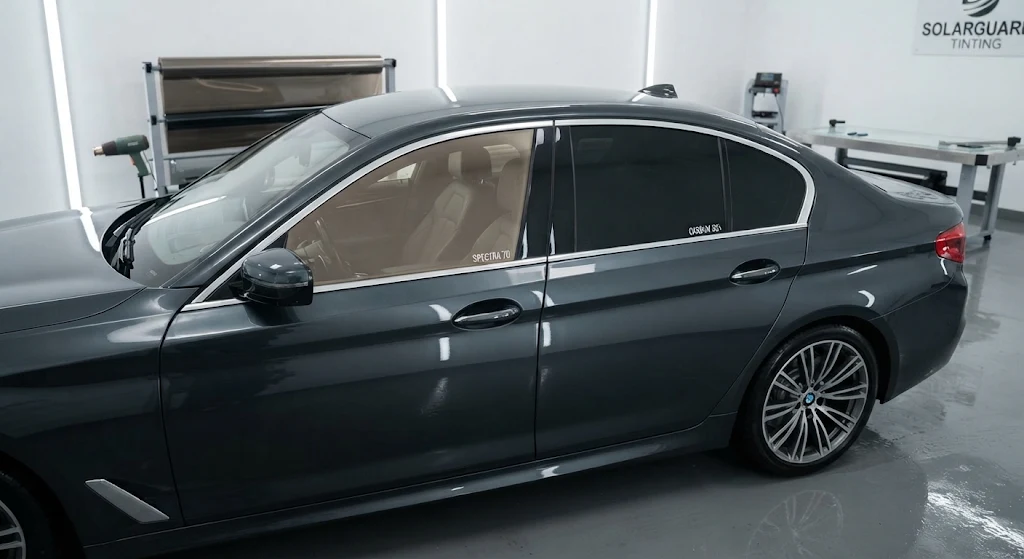
Material quality matters, but workmanship also shapes the result. Window tint installation requires clean glass, careful measurement, and even application; dust, creases, or poorly trimmed edges can undermine appearance and longevity. Professional fitting can also help ensure the selected film is suited to the vehicle’s glass and intended use.
Before choosing, compare the factors that affect day-to-day usability:
- Check visible light transmission and confirm the shade complies with local rules.
- Review independent product specifications for heat rejection and UV filtering.
- Consider whether clear visibility, signal compatibility, or a particular finish matters most.
- Ask about the film’s care instructions and warranty terms before installation.
These checks are especially useful because automotive film technology continues to develop, and product names alone do not guarantee identical results. A qualified installer can explain how a specific film will perform on a particular vehicle. Additional guidance on automotive upkeep can also help place tinting within a broader maintenance plan.
Dyed, carbon, and ceramic films serve different priorities, from appearance to more capable heat management. Compare verified specifications, visibility, and legal limits, then consult an automotive tint professional for personalized advice and installation.