Windshield chips may appear insignificant, yet temperature swings, road vibration, and potholes can turn a small impact into a spreading crack. Resin injection fills the damaged area, helps restore the glass’s strength, and often makes the mark less visible, but the right method depends on the damage’s size, depth, and location. Understanding the process explains what professional windshield chip repair can achieve—and when replacement is the safer choice.
Resin Injection Stages for Windshield Chip Repair
A technician first assesses whether the damage is suitable for repair. Size matters, but so do its depth, proximity to the windshield’s edge, position in the driver’s view, and signs that moisture or debris have entered the break.
Once repair is appropriate, the damaged spot is cleaned and dried. Loose glass and contamination can obstruct the resin, so careful preparation gives the material a better chance of bonding throughout the break.
The next stages use specialized glass repair techniques to fill and secure the damage. The exact setup varies according to the chip pattern and the technician’s equipment.
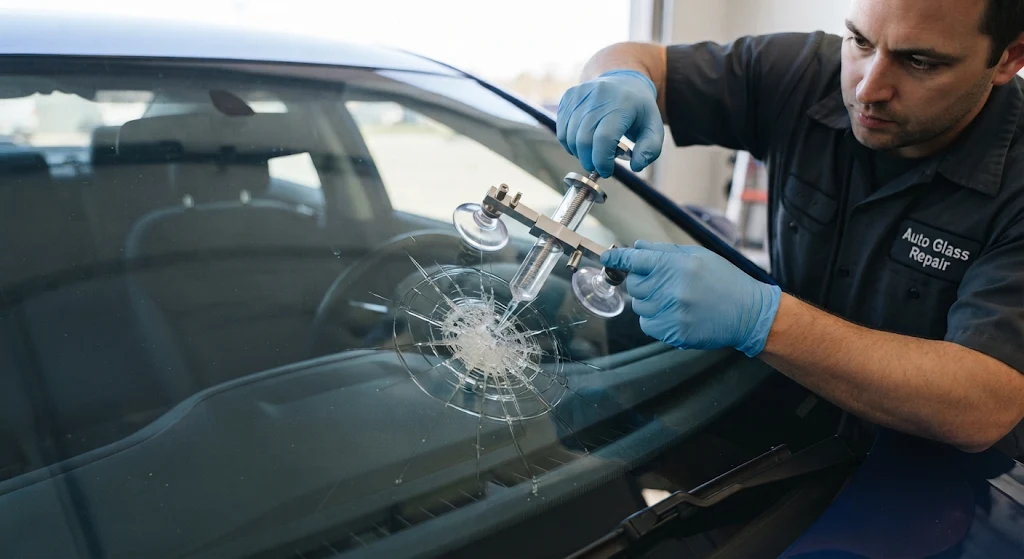
Vacuum Injector and Windshield Resin
A vacuum injector is positioned over the impact point to draw trapped air from the break. The technician then introduces clear windshield resin under controlled pressure, helping it reach narrow branches that may not be visible at first glance.
Removing air is important: unfilled pockets can leave dark marks and weaken the repair. A well-matched resin and careful pressure control support both clarity and stability, although some blemish may remain after the work is complete.
Resin Curing and Final Inspection
After the break is filled, UV light hardens the resin and bonds it within the glass. This resin curing stage typically takes only a few minutes with suitable equipment, though timing depends on the product and conditions.
Excess material is removed, and the surface is polished. A final inspection checks the finish and repair quality; the result should stabilize the damaged area, but it cannot guarantee that the impact mark will vanish completely.
Repair Limits and Method Selection
Resin injection is not suitable for every windshield. Industry guidance such as ROLAGS 002-2022 sets repair limits for laminated glass, while individual service providers may apply more restrictive criteria based on safety, visibility, and equipment.
For technicians, common reference dimensions distinguish among damage patterns: a bullseye, a combination break, a star break, and a long crack are not assessed in the same way. Location is equally important; damage in the driver’s primary viewing area or close to the edge may call for replacement rather than repair.
These factors help determine whether automotive glass repair is appropriate. A professional inspection is especially important when the damage crosses layers, reaches the windshield edge, obstructs the driver’s view, or has collected moisture and debris.
| Assessment Factor | Why It Matters | Possible Direction |
|---|---|---|
| Size and pattern | Different breaks have different repair limits. | Repair or replacement after inspection |
| Depth | Damage to multiple layers can compromise the laminate. | Often requires replacement |
| Location | Damage in the driver’s view or near an edge can affect safety. | Technician assessment; replacement may be advised |
| Contamination | Water, dirt, or loose glass can prevent proper resin bonding. | Repair may be less effective |
Professional Repair and Do-It-Yourself Kits
A chip repair kit may suit certain small, clean impacts, but kit instructions and size limits differ. Some products address chips only; others include procedures for short cracks. A kit’s stated limit does not override damage location, glass condition, or professional repair standards.
Attempting a repair with excessive pressure, unsuitable temperatures, or contaminated resin can worsen the damage or produce a poor finish. When the crack is growing, lies in the driver’s sightline, or exceeds the kit’s guidance, a qualified technician can assess whether windshield crack repair or replacement is the safer option.
Prompt assessment and controlled resin application offer the best chance of preserving a repairable windshield. For advice tailored to the vehicle and damage, consult an automotive glass professional before the chip spreads.