
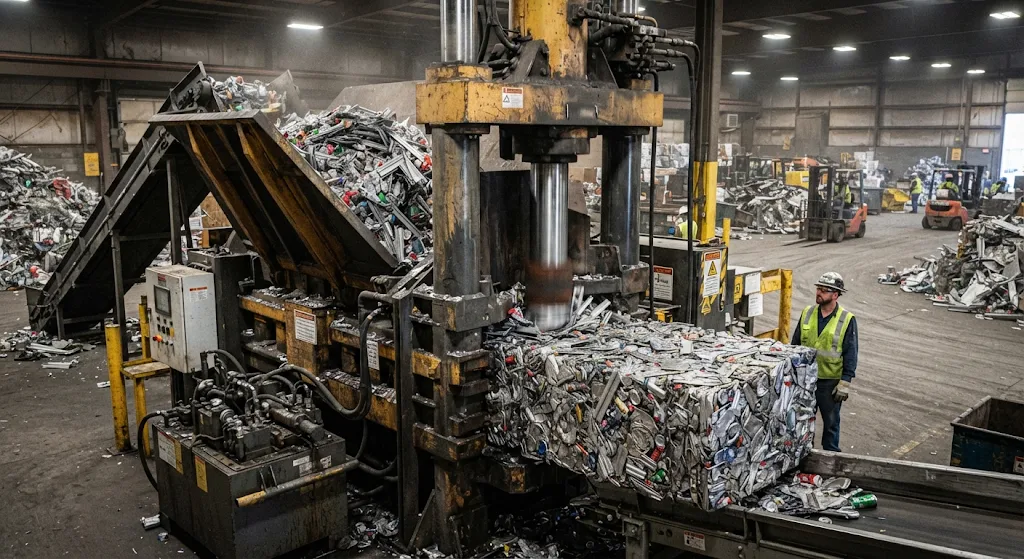
Aluminum scrap moves through a sequence of machines that transform bulky, mixed, or fluid-laden material into cleaner, denser feedstock. The right equipment depends on the scrap’s form, contamination, throughput, and destination—not simply on how much material arrives. Understanding how these machines work makes it easier to design a processing line that handles material consistently and prepares it for the next step.
Aluminum Scrap Processing Equipment and Its Role
Aluminum scrap varies widely: profiles and sheet offcuts behave differently from castings, beverage containers, or fine machining chips. A processing line therefore begins with an assessment of material size, alloy mix, coatings, moisture, and the requirements of the downstream furnace or buyer.
Equipment selection is about matching each operation to the material. Oversized pieces may need cutting before they can be shredded, while oily chips require a different treatment from clean, dry extrusion scrap. A well-planned line reduces unnecessary handling and helps maintain a steady flow.
Aluminum Scrap Sorting and Conveying
A Scrap sorting system separates aluminum from ferrous metals and other unwanted materials using combinations of magnets, sensors, air separation, and manual inspection. Better separation supports more consistent furnace batches and reduces the risk of incompatible materials entering later stages.
A Conveyor system links receiving, inspection, and processing equipment, controlling the pace at which scrap reaches each machine. Its belt width, loading points, and guarding should suit the material, since tangled or irregular pieces can disrupt flow and create hazards.
Aluminum Scrap Size Reduction Machines
Once sorted, scrap may need to be reduced in size for easier handling or more predictable processing. The choice between cutting, crushing, and shredding depends on the dimensions and toughness of the incoming material.
These machines perform distinct jobs, so selecting one should follow the intended output rather than a general preference for maximum force.
Aluminum Scrap Shredder and Metal Shearing Machine
An Aluminum scrap shredder breaks scrap into smaller fragments using rotating cutters. It is suited to bulky or irregular feed, but the operator must account for alloy characteristics, wall thickness, and contamination to avoid excessive wear or inconsistent output.
A Metal shearing machine cuts long or oversized pieces into manageable sections. In contrast, a Scrap metal crusher applies compressive force to reduce suitable items, such as certain cast or formed scrap. These methods are not interchangeable: cutting preserves a different material profile from crushing or shredding.
Aluminum Scrap Moisture Removal and Compaction
Machining operations often produce chips mixed with cutting fluids, while loose scrap can occupy considerable storage and transport space. Dedicated machines address these issues by separating liquids or compressing material into denser forms.
Processing choices should reflect the scrap’s condition and the requirements of storage, transport, and remelting. The following distinctions help clarify what each machine is designed to do.
Aluminum Chip Wringer and Metal Briquetting Press
An Aluminum chip wringer uses mechanical action, often centrifugal force, to remove residual cutting fluid from metal chips. Recovering fluid can support cleaner handling and reduce liquid carryover, while the chips become more suitable for subsequent processing.
A Metal briquetting press compresses loose chips or other compatible small metal pieces into dense briquettes. Briquetting can improve storage and feeding characteristics, but the material generally needs suitable preparation; excessive moisture or mixed contaminants can compromise briquette quality.
Hydraulic Baler and Scrap Compactor
A Hydraulic baler compresses eligible scrap into bundles for handling and transport. A Scrap compactor likewise reduces volume, though its design and output depend on the material and application; the terms do not always describe identical machinery.
Before choosing a press or compactor, facilities typically compare feed dimensions, operating cycle, discharge format, and integration with conveyors. These factors determine whether the equipment can maintain a practical, consistent workflow.
Aluminum Recycling Equipment Selection and Integration
Aluminum recycling equipment works best as a coordinated system rather than a collection of isolated machines. Capacity must be balanced across stages: a high-throughput shredder can create a bottleneck if the sorting line or baler cannot keep pace.
Assessment should also cover noise, dust, guarding, maintenance access, and the handling of cutting fluids. A practical equipment review considers the entire material path, from receiving and separation through processing and discharge.
Common selection criteria include the following, each of which affects performance and operating consistency:
- Scrap characteristics: alloy mix, dimensions, contamination, and moisture.
- Required output: fragment size, briquette density, or bale format.
- Line capacity: expected throughput and compatibility between machines.
- Operating conditions: available space, safety provisions, maintenance needs, and fluid management.
Equipment specifications should be checked against actual material samples whenever possible, because nominal capacity alone does not guarantee suitable results. A recycling-equipment professional can assess the process and recommend a configuration tailored to the facility.

