
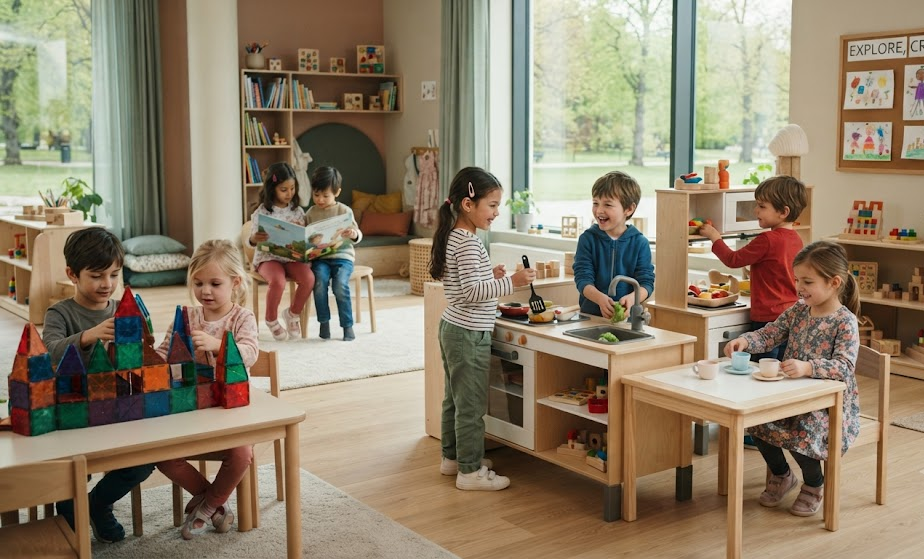
In a world where structured learning methods dominate early education, the essence of play stands out as a vital contributor to child development. The transformative power of play not only captivates children’s imaginations but also lays the foundation for essential skills as they journey through their formative years. This article delves into the significance of play in early childhood learning, showcasing its role in fostering cognitive, emotional, and social growth.
Recognizing Play as a Critical Component of Learning
Play serves as the bedrock of early childhood education, acting as a natural medium through which children explore concepts, solve problems, and collaborate with peers. Instead of viewing play as merely a pastime, it can be regarded as an indispensable aspect of learning that nurtures the whole child.
Exploring Play-Based Learning
Play-based learning has deep historical roots, tracing back to educators like Friedrich Fröbel, who envisioned the kindergarten as a garden of experiences. He asserted that play is the highest expression of human development, stating, “Play is the free expression of what is in a child’s soul.” This sentiment resonates with modern pedagogical practices, where play facilitates meaningful learning experiences.
Understanding the Benefits of Play
The benefits of play extend beyond mere enjoyment. Research demonstrates that play-based learning enhances problem-solving abilities, creativity, and social skills. Activities involving blocks, storytelling, or pretending to run a shop foster authentic learning experiences. When children engage in such activities, they develop not only cognitive strategies but also emotional resilience and teamwork.
Creating Environments That Encourage Play
A play-based classroom is thoughtfully designed to spark curiosity and discovery. It is not a haphazard space but rather a carefully curated environment where children can explore diverse learning modalities. Teachers intentionally integrate learning goals into play scenarios, making education an engaging part of their daily lives.
Strategies for Implementation in Early Education
To effectively harness the power of play, educators can adopt several strategies:
- Structured Play Activities: Design activities that integrate academic goals with playful elements, allowing children to learn concepts while having fun.
- Role-Playing Scenarios: Incorporate imaginative play where children can take on different roles, enhancing their social cognition and empathy.
- Outdoor Learning: Utilize outdoor spaces to engage children in physical activities that promote coordination and teamwork.
Connecting Research to Practice
According to the American Academy of Pediatrics, play is critical for developing cognitive, emotional, and social skills. In fact, modern studies reveal that children who engage in play-based learning exhibit better mastery of new concepts and enhanced cognitive functions. This connection reinforces the idea that play is not simply a filler in the school day; it is an essential practice for nurturing a lifelong love of learning.
Real-world Implications of Play-Based Learning
In practice, educators have observed firsthand the influence of play on learning outcomes. For instance, classrooms that focus on play-based methods report higher levels of engagement and enthusiasm among children. This engagement translates to greater cognitive retention and emotional well-being, as children find joy in their learning processes.
Emphasizing the Role of Parents in Facilitating Play
Parents play a vital role in reinforcing play-based learning at home. Simple actions and activities can profoundly impact a child’s development. Parents can create a supportive environment that encourages exploration and imaginative play.
Effective Home Strategies
Here are several ways parents can promote play-based learning:
- Imaginative Play: Encourage children to engage in make-believe scenarios that allow them to develop language and social skills.
- Hands-On Activities: Provide building materials like blocks or art supplies to foster creativity and fine motor development.
- Outdoor Adventures: Spend time in nature, encouraging physical activity that boosts coordination and exploration.
Harmonizing Play with Academic Readiness
In an educational landscape that often prioritizes standardized testing, play-based learning emphasizes the need for a balanced approach. The incorporation of playful methodologies can effectively prepare children for academic success. As educational policies evolve to recognize the significance of play, more institutions are adopting frameworks that prioritize this holistic approach. New Hampshire and Connecticut have introduced legislation to integrate play-based standards into early education, exemplifying a shift towards recognizing the importance of play.
Long-term Impacts of Play in Education
Ultimately, the role of play extends far beyond the classroom. Children who are allowed to play develop not only crucial academic skills but also essential life skills such as problem-solving, adaptability, and collaboration. These competencies will support their educational journeys and enrich their future endeavors.
Conclusion
In embracing play as a fundamental aspect of early childhood learning, we unlock a pathway to creativity and growth. As families, educators, and communities, it is essential to recognize that fostering a love for learning through play lays the groundwork for resilient, capable adults ready to navigate the complexities of the world.


